Sermorelin research found changes in growth hormone and IGF-1
See which people were studied, what researchers found, and what remains unproved.
Studies found blood changes in men and faster growth in children
The lab-made drug Sermorelin asks a small gland under your brain to release growth hormone. This page gives the strongest findings and their limits. Your liver then makes IGF-1, a second growth hormone that helps with growth and repair [6].
In older men, growth hormone and IGF-1 moved toward younger men's readings [2]. Among children lacking enough growth hormone, Sermorelin increased yearly growth [1]. Researchers tested tesamorelin, another medicine drawn from the same natural hormone, for fat level and thinking scores [7]. Sermorelin can't claim those tesamorelin results.
A 2008 medical article gave an important warning. It said the evidence did not support anti-aging care [5]. Each section below gives a finding, followed by its limit.
Sermorelin starts growth hormone while IGF-1 helps stop it
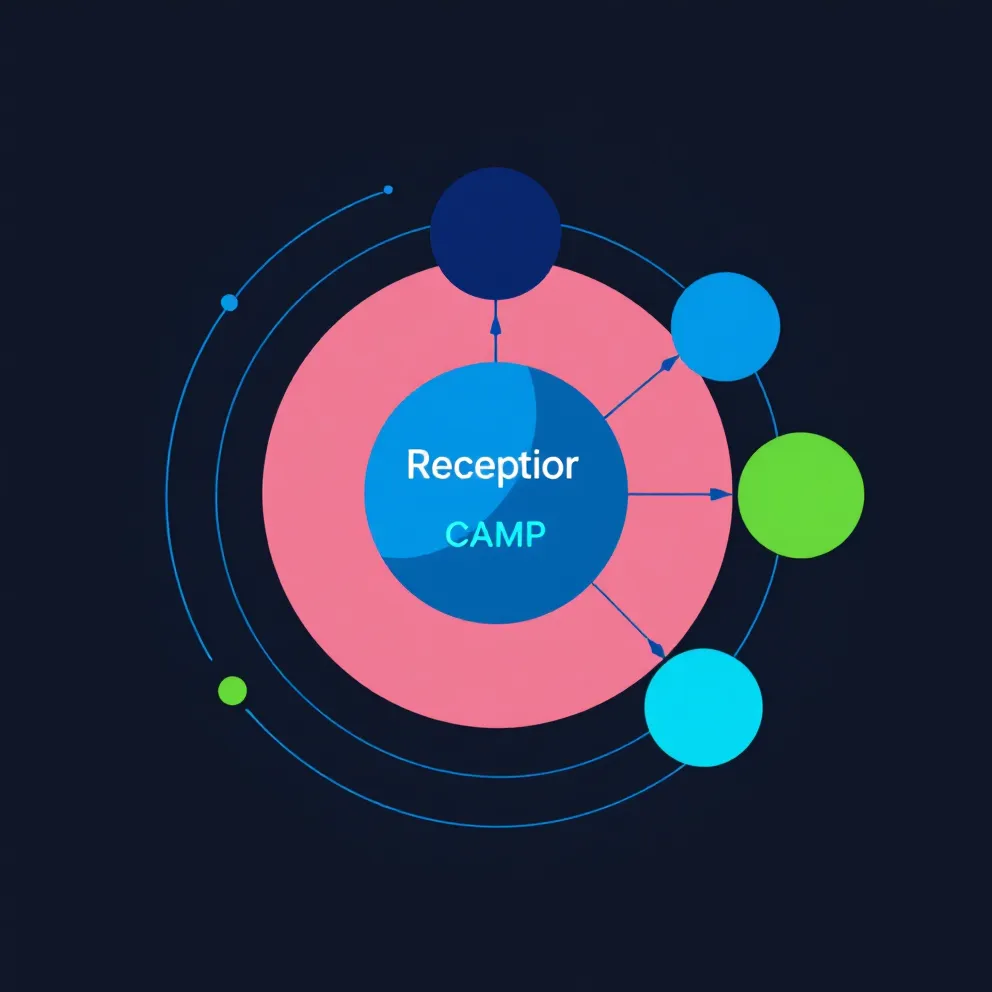
Sermorelin copies a short section of the natural hormone that begins a release [6]. The drug moves through your blood to the growth gland [6]. Cells there send out growth hormone briefly [6]. Growth hormone then reaches your liver. Your liver makes IGF-1, the second growth hormone that acts in body tissue.
Sermorelin asks your gland to respond; the drug isn't growth hormone itself. That difference leaves your natural controls in place [4][11]. One hormone slows the release. IGF-1 also slows further release when enough is present. Earlier work found both controls still acted after the first brain message [11].
A 2025 review brought older and newer work on these steps together [6]. It traced the work of the brain hormone, growth gland, and liver. The review added no proof of benefit for patients.
Does Sermorelin work? The gland answered in short studies
The does sermorelin work question has a narrow answer. Blood tests show whether your growth gland responds. Those tests don't prove broad claims about aging.
One study followed healthy older men whose average age was 68. They received 0.5 mg or 1 mg twice daily for 14 days. Their 24-hour growth-hormone readings climbed higher at the larger amount. IGF-1, a later hormone made in your liver, also increased. Both changes came from blood tests. At the larger amount, growth hormone and IGF-1 equaled younger men's readings [2]. Another study followed 30 healthy men after researchers put medicine into a vein. For roughly three hours, the blood test still showed raised growth hormone, although Sermorelin soon left the blood [3].
Those blood tests give you one narrow answer. They don't show that you will regain youth or add years to life. A lasting benefit against aging remains unproved [5].
Older men's IGF-1 tests improved; lasting benefit is unknown
Growth-hormone release tends to fall as people age. In one study of older men, Sermorelin raised growth hormone and IGF-1 over two weeks [2]. IGF-1 is a later hormone from your liver. An article said Sermorelin might fit your body's usual rise and fall better than injected growth hormone. The growth gland still controlled the release [4]. That was one author's view, not a direct test of which choice works better.
Tesamorelin supplied the strongest thinking result. Tesamorelin is a different medicine drawn from the same natural hormone. The study followed 152 older people. Of those people, 66 entered with mild memory or thought problems. After 20 weeks at 1 mg/day before bed, the whole group scored a little higher on thinking tests. IGF-1 rose 117%, yet remained within normal limits. A big percentage change can still end inside those limits. Body fat also fell 7.4% [7]. This wasn't a Sermorelin study.
A review said IGF-1 might protect brain cells, but results in patients were mixed [9]. Another study followed people after radiation to the head. Lower growth-hormone release went with worse memory and focus [10]. That link doesn't show that Sermorelin would help your brain. IGF-1 gives researchers a question to study, not an answer for your care.

Children who lacked growth hormone grew faster
The firmest Sermorelin result comes from children. They hadn't reached puberty, and their growth-hormone supply was low. Each child received a daily shot into body fat, and growth sped up. Their first-year growth increased from about 4.1 cm/year to roughly 7-8 cm/year. IGF-1, a later hormone produced in the liver, didn't rise too high [1].
This childhood use once had drug approval. A ruler could show the child's extra growth. The result wasn't only a change on a blood test [1]. The childhood finding still can't predict your later-life result.
New brain work from 2024-2026 hasn't proved a benefit in people
A 2026 Alzheimer's study tested rat and human cells grown in dishes. It also tested mice bred to develop changes like Alzheimer's disease. The cells showed less harm, and the mice had less harmful protein buildup and brain swelling. The mice also lost fewer nerve links and did better on thinking tests [12]. These findings aren't proof that Sermorelin treats a person's memory.
A 2024 study did include people. They had gone through life without enough growth hormone and had received no care for it. Their brain scans didn't show faster aging than usual [13]. A 2025 review then explained how the brain, growth gland, liver, and IGF-1 made by your liver work together [14].
The newer work leaves an open question for you. Findings from cells and mice don't amount to a treatment result in people.